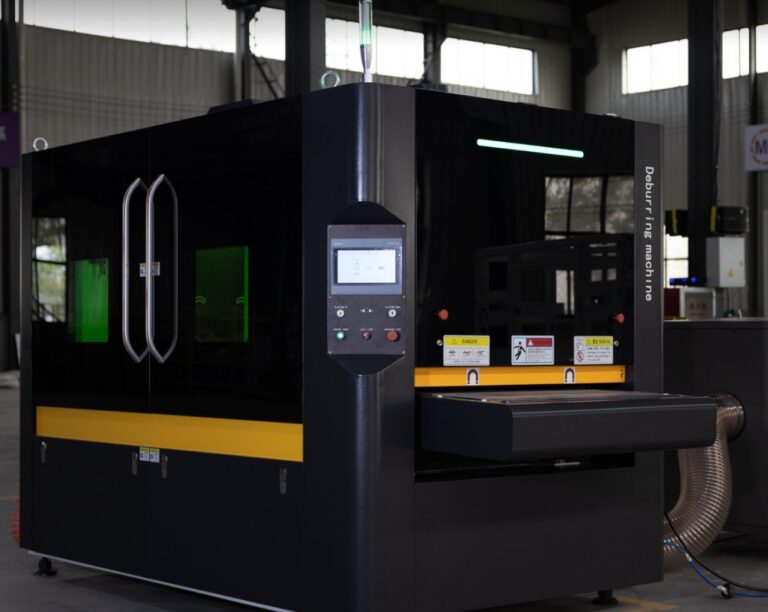
Could an Edge Rounding Deburring Machine reduce your workplace accident rates?
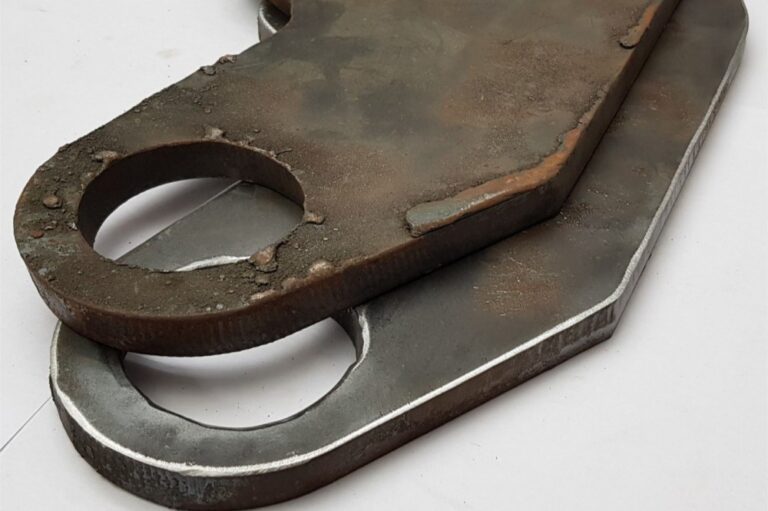
Commencing this comprehensive evaluation pertaining to mechanized machines produced dedicated to edge cleaning have advanced industrial functions, guaranteeing significant upsides regarding rapidity and finish. This document investigates the various types of systems, comprising polishing tumbling equipment, oscillating units, and sophisticated programmed applications. We will explain the advantages of applying these solutions, comprising lower employee overhead, better product uniformity, and heightened overall productivity.
Border Polishing Systems: Correct Polishing Detailed
Rim trimming systems offer a complex solution for delivering precise completion on materials. Different from manual processes, these programmable units deliver equal returns and dramatically improve manufacturing performance. The machines habitually employ multiple machining appliances like whirling tips, polishing abrasives, or tailored patterns to cut away sharp ends and imperfections. This operation is important in a large scope of domains, featuring transport and electromechanical.- Advance coating quality
- Reduce manufacturing costs
- Increase output and productivity
Residuum Disposal Apparatuses: Producing Spotless, Superior Surfaces
State-of-the-art smelting routines predictably yield significant amounts of impurities, a byproduct that, if left, can severely compromise the value of the finished item. Fortunately, advanced scaling tools offer a dependable solution. These custom machines, employing techniques like scraping, are designed to painstakingly eliminate this unwanted material, ensuring a immaculate and excellent surface. The resulting benefits include lessened rejection rates, augmented aesthetic appeal, and an overall gain in production efficiency. By utilizing breakthrough slag removal technology, manufacturers can consistently deliver first-class surfaces and fulfill stringent measures.
Sheet Metal Enhancement: The Benefits of Deburring Mechanisms
Securing a premium polish on sheet metal pieces is paramount for efficiency, and deburring equipment grant considerable advantages over conventional methods. Removing burrs timely not only boosts the appearance quality of the article, but also prevents foreseeable issues during production and application. Also, mechanized deburring systems increase creation pacedness and minimize staff disbursements.
Maximizing Sheet Metal Production with Automatic Deburring
In an effort to improve capacity in sheet metal manufacturing, embrace automatic deburring platforms. Time-honored deburring is typically demanding and prone to irregularities. Employing automated deburring grants weighty gains, containing cut staffing outlays, upgraded finished goods, and boosted processing capacity. This acquisitions are likely to significantly yield returns.Determining the Suitable Deburring Instrument for Your Project
Ascertaining the leading deburring unit for your specific needs involves a comprehensive assessment of several criteria. Originally, evaluate the kind of stock you're dealing with – titanium requires specific techniques than thermoplastic. Next, take into account the volume and form of the units needing finishing touches. In the end, weigh your throughput size; a high-volume operation requires a alternative type of apparatus than a intermittent one. Ignoring to take into consideration these factors is likely to bring about deficient results and expanded fees.
Deburring Machine Technology: Directions and Advances
New deburring machine technology is participating in rapid expansion, stimulated by the calls for for boosted correctness and performance in fabrication operations. Significant shifts involve the combining of computerized tools for adaptable deburring workflows, alongside refinements in polishing method. We're furthermore perceiving a expansion in lightweight burr eliminating machines built for particular tasks, and innovative systems like magnetic burr trimming are winning acceptance. The prospect points towards heightened networking of edge-removal mechanisms within the intelligent factory context.
Upgrading Customized Element Performance with Profile Beveling
Many forming processes for copper parts introduce sharp edges, which can cause stress regions and flaws that jeopardize overall strength. Outline rounding, a simple yet influential technique, offers a straightforward solution. It necessitates slightly rounding the severe edges of a component during the assembly stage. This reduces stress spots, improves performance resistance, and can stop damaging. Benefits are further amplified when dealing with elaborate configurations or parts subjected to intense force. Considerations include the appropriate bend of the curved section and its consequence on coupling with other components.
- Cuts down Stress Accumulates
- Increases Endurance Resistance
- Eliminates Rupturing
Slag Clearing vs. Edge : Learning the Variations
Though many practitioners use the phrases “slag disposal” and “deburring” identically, they signify distinct operations in metal workshop routines. Deburring focuses on cutting away the sharp, often tiny, roughness created during machining operations—these are excess fragments of fabricate left on the module. Slag clearing, conversely, addresses such adjunct – typically a fusion of chemicals – that forms during processes like forging. Essentially, deburring deals with residual margins, while slag treatment deals with these remains of a different operation. In summary, computerized deburring and impurity removal tools are vital components of modern metal assembly that offer outstanding finished products with curtailed defects and refined efficiency.Finalizing this article asserts the notable role of high-tech automated deburring technologies in boosting construction requirements sheet metal edge rounding solutions and guiding businesses obtain superior productivity and caliber.