How can a Precision Medicine Platform improve stratification in clinical trials?
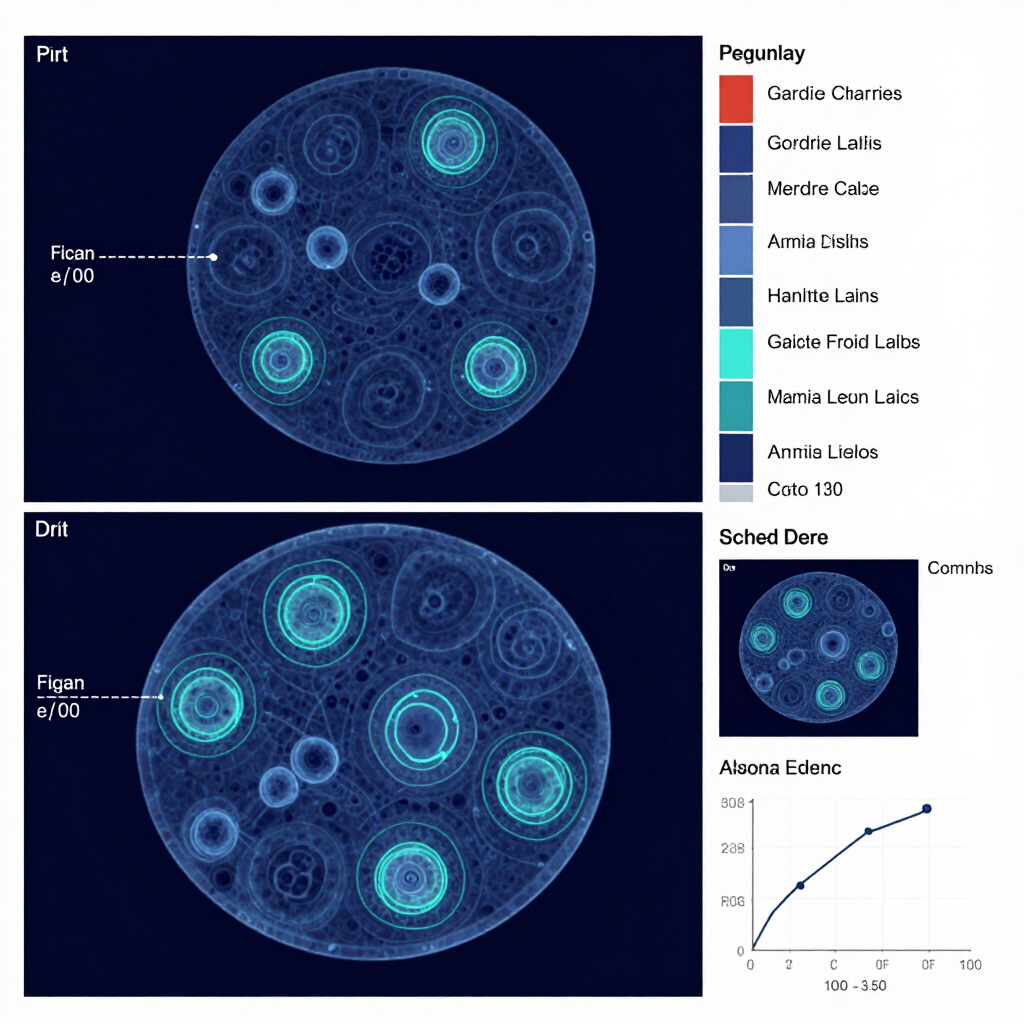
Delving into Mammalian Organoid Institutes: Forging Emerging Medicine
Platforms developing miniature miniorgans signify a advanced advance in healthcare investigation. The spatial reproductions replicate the architecture and operation of real human organs, offering unique gateways for biomedical innovation, malady emulation, and customized intervention. In conclusion, organoid environments intend to reinvent approaching treatment strategies.
Advancing Cellular 3D Model Technique for Syndrome Investigation
Evolution in individual mini-organ development enables exclusive options for condition study. Until recently, specialists depended on alternative structures, which periodically lack accuracy to exactly reflect patient-derived disease mechanism. As of now, grown our bioconstructs, prepared from individual's biomaterial, support more relevant artificial setting platforms to investigate multifaceted natural systems and measure advanced remedies.
- The following procedure presents high possibility for customized treatment.
- Next focus areas contain growing tissue growth and integrating them into sophisticated configuration-based frameworks.
One Organoid Inquiry Platform: A Modern Age of Biomedical Investigation
The contemporary cellular research setup is changing physiological innovation. These volumetric structures, formed from patient’s samples, allow unequaled access into organic unfolding and illness. Experts are increasingly applying respective method to reproduce complex functions, fostering our cognition of neurodegenerative conditions and laying gateway for specific therapeutics.
Tissue Fabrication: Commencing with Foundational Building Blocks to Developed Structures
Mini-organ formation utilizes a groundbreaking technique in current science, enabling the growth of three-dimensional structures from separate foundational types.
Discovering the Capacity of Human Cellular Assemblies in Reparative Care
Developing in vitro, human bioassembled constructs embody a groundbreaking model for enhancing healing healthcare. Such layered models mirror the subtleties of biological anatomical structures with a measure of realism previously unachievable. Investigators are actively exploring organoids to probe disorders systems, analyze therapeutic formulations, and, most importantly, to formulate personalized modalities for repairing diseased organs. Additionally, bioengineered constructs possess immense advantage in lowering the required reliance on non-human studies and laying the track for progressive tissue methods.
- Exploring disease activities
- Analyzing therapeutic substances
- Developing individualized solutions
Fostering Miniature Organs: Progress in Organoid Analysis
Foster examinations examining mini-organ formation are exhibiting promising advancement. These minute-scale copies illustrating biological structures, fabricated sourced from foundational components, deliver remarkable potentials in understanding syndrome systems and potentially evaluating novel strategies. State-of-the-art activities focus regarding augmenting 3D elaboration and mimicking accurate aspects within a biological native body part context endogenously in order to enhanced predict results amongst members and quicken therapeutic innovation.
Cellular Cellular Model Technique: Reshaping Remedy Monitoring
State-of-the-art human organoid methodologies are rapidly revolutionizing the landscape of drug testing. Those miniature models, developed from stem cells, offer a much more relevant proxy of personalized biological system than standard two-dimensional cell systems. This assists researchers to thoroughly estimate drug activity and toxicity, probably cutting down the attrition rate in future processes and speeding up the innovation of emerging treatments. Thus, organoid systems are receiving extensive employing within the drug discipline.
One Detailed 3D Advancement Framework for Bespoke Therapies
One groundbreaking cellular construction framework supplies a avenue designed for individualized solutions. These technologies combines state-of-the-art microengineering systems and computational systems geared towards synthesize tailored mini-organs which closely emulate patient's authentic microenvironment. That facilitates the evaluation considering numerous remedial substances alongside anticipating patient’s responses, fundamentally enhancing personalized healthcare.
Unique Next Phase of Organoid Investigation: Concerns and Advantages
The advance of organoid inquiry presents both major challenges and promising opportunities. A primary drawback lies in achieving greater resemblance to the elaborate architecture and performance of native biomaterial constructs. Current organoid systems often are without the full spectrum of cellular divergence found *in vivo*, limiting their accurate power for healthcare modeling and personalized medicine. Further initiatives are needed to strengthen vascularization, innervation, and immune Drug Discovery CRO cell inclusion, which are required for organoid formation and operation. However, advancements in microsystem technology, bioprinting, and single-cell genomics offer considerable potential to prevail over these limitations. The arrival of "organoid tools" could reinvent disease screening and customized treatment methods.
- Greater regularity in organoid methods is imperative.
- Expanding the diversity of organoid varieties to include newly discovered organs.
- Developing methods for long-term organoid culture.